Pages

Showing posts with label carrot. Show all posts

Sunday, September 29, 2013

Update


Hello people, sorry for such the delay. I've been uber busy with school and all kinds of stuff like that. I'm messaging here today to give a somewhat update as to what has happened since my last post. Today I had one of the first carrots from the planter and although it wasn't the largest it was quite delicious. I'm hoping the other carrots were spaced far enough away so that they can gain some girth to the roots. I'll just have to learn in a few more weeks.
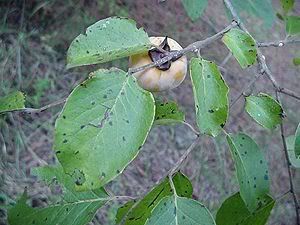
diospyros virginiana photo: Diospyros virginiana Diospyrosvirginiana.jpgThe tomato is finished for the year and I removed it from the large planter, which still has the carrots, basil, mint, oregano, and chives. The oregano has seemed to make a semi-groundcover around the planter which is quite cool to look at and the mint is actually somewhat staying in control. Starting this week in the Hardiness zone 7 it is going to be persimmon picking time and while I don't have a persimmon tree on my property, there are plenty of persimmon on the campus where I am going to school. Now for those of you who don't know what a persimmon tree is, it is a very cool native tree to the mid-Atlantic region, being a very large canopy forest tree. It has fleshy fruit that is quite a bizarre consistency but delicious nonetheless. The fruit looks like a strange combination between a peach and a tomato and the taste can only be described as sweet.
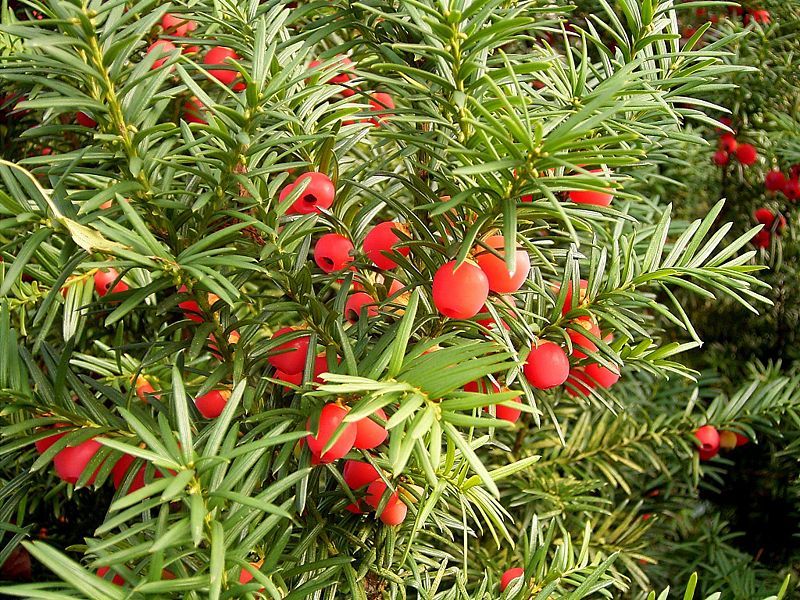
 In addition to it being good time to pick the lovely native fruit tree persimmon, for people who have yews near them, the fruit, or aril as it is called, is ready to be eaten now. A WORD OF CAUTION. Do not eat the aril from the yew bush unless you know how to eat it. You want to eat the squishy red fleshy part AROUND the seed and be sure to SPIT THE SEED OUT if you do eat it. Please for safety purposes, do not eat the arils in front of young children or young college students (or as some of my professors say, are essentially the exact same thing), as they will think "oh I'm gonna get a free snack and end up dying of yew poison. The seeds are poison to humans and if someone injects too many, they will die. PLEASE, thus, be careful when eating them, and be mindful of who is watching.
Lastly, I would like to mention that I have chosen to plant pumpkins along my deckline and the one plant that came up is doing quite well. I will get back to you on when it starts forming pumpkin.

Thursday, June 20, 2013

Seeds and saplings

Hello to everyone, I have quite the new assortment of plants this week! First plant I got this week was actually an herb to replace a plant I previously had. For whatever reason the thyme I had planted by the rosemary and sage vanished not too long ago and honestly it didn't look that healthy anyway. So while at the grocery store I decided I would go and buy a new more healthier plant and I am planning on putting it where I had the previous one.
In addition to buying new thyme, I decided to go to a small garden shop. While driving home from work during the week, I always pass this tiny little herb and flower shop and just a few days ago I decided "What the heck, I'll stop by."" The types of plants they had were amazing. Unfortunately for them I already have most of the ones they were selling. However, as I walked around, I remembered that chives are very good for carrots which I have planted with my tomato assortment.
Finding some chives, I went to go to the check stand when I saw, and smelled, something that caught my attention. It was a small herb called "dwarf curry." Although its culinary uses are limited, after buying it I did a little research on it and apparently it is used for medicinal purposes. If you steep the leaves into a tea it can help with sore throats. The oil can be used as a soothing ointment. If you want to look up more uses of it the Latin name is Helichrysum italicum. Here is a good website that explains all the uses of the plants oil http://www.helichrysum-italicum.com/properties.html
This plant is, like most aromatic plants, very drought tolerant. It likes dry soils and full sunlight, so top of a hill would be a perfect place for this plant. As the name entails, it has the smell of curry, although when cooked it apparently isn't strong at all. This plant is, from what I've learned, mainly used for its aromatic smell and medicinal qualities. 
In addition to these plants I bought, I also got some seeds from my neighborhood gardening store and bought watermelon, edamame, and stevia. Because watermelons like warm soil, and lots of room to grow in, I will probably have to think about where I will plant them. The edamame beans, becauses they are beans, will be planted along the fence and likely replace some of the dead beans that are simply flopped against it. As for the stevia, because it is a tropical plant, I will have it in a sandy loam soil and water it regularly.
My final plant, which I obtained today while gardening, is the deciduous tree Betula nigra, river birch. While I was weeding an azalea and rhododendron garden, I noticed a small birch sapling that didn't belong in the bed. Instead of simply tossing it into the trash however, I decided I would wrap it in paper towels and bring it home. River birch is a good native tree that can do well in a wide variety of areas. It can handle incredibly dry soil as well as incredibly thick clay soils. In addition to being adaptable, it is also a very good landscape tree. It can grow 40-50 feet in height and its most prominent and interesting feature is the exfoliating paper-like bark. I have it now planted in my backyard next to the Little Henry sweetspire.
In terms of my other plants, the tomato has began producing more fruit and the first few ones have started to change from green to orange. The bell pepper has just started to bloom its flowers and hopefully I will be able to see some peppers forming soon. The oak sapling, as well as many other saplings I've tried to propagate,  have unfortunately passed away, but the bluebeard, which is near the rosemary and sage, is doing alright, albeit being a tad bit lopsided. The blackberries have yet to ripen, but I walked by just today and the berries are fully formed and starting to turn red, which means that in a couple of weeks they will be ripe and ready to eat. Sometime in the next few weeks, I'm going to do a post solely dedicated to "what not to plant." This will be in terms of primarily landscape plants and ornamental plants, rather than fruiting ones. I will also go over good native alternatives or good non-native plants that aren't as aggressive. Good night and happy gardening!

Wednesday, May 1, 2013

Plants Galore!

Well hello peeps. I have been given even more plants by my professor and couldn't be more excited! First off these honey locust, Gleditsia triacanthos, are now in individual tubelets as I call them and in my possession. Like the Cercis canadensis it is a native member of the Fabaceae family. I will be growing 9 of these. In addition to these I received a much larger basil and a new stronger tomato plant. The last edible thing is a green bell pepper plant but my list doesn't stop their. I received some wonderful landscape plants, who's names are escaping me right now. They are annuals but they are pretty and I look forward to planting them.
In addition to these plants I got for free, the other day I bought some seeds from a gardening store, Benhke's Nursery, in Beltsville MD. I bought carrot seeds, lettuce seeds and chamomile seeds. Starting today is the start of corn planting season so I may buy some corn seeds as well. I planted the carrots in a large pot which I have been planting my other plants in. I will take pictures in later posts. Its coming around quite nicely. Literally right after I planted them our area got plenty of rain and mist which was great for the plants. 
When I get home today I will be taking out the not so well tomato and planting the nice healthier one. I am also planning on planting the Lavender by our fence.